




19/10/2026
Burn Injuries: First Aid, Treatment & Recovery Guide
 What happens after a burn heals?
Burn recovery does not necessarily end when the wound closes. Some scars may become raised, thickened, itchy, painful or tight (hypertrophic scar or keloid).
Scar tightening can sometimes restrict movement, particularly when it affects the neck, hands, eyelids or joints. This is known as a scar contracture.
Scar management, rehabilitation or reconstructive surgery may be considered depending on the problem and its effect on function.
What is the role of Plastic and Reconstructive Surgery?
Plastic and reconstructive surgery may be involved in both the acute treatment of burns and the management of their longer-term effects.
Treatment may include wound management, surgery, skin grafting, scar management and reconstruction of burn scar contractures. Not every burn or scar requires surgery, and treatment is individualised according to the injury and the patient's needs.
This article is intended for general health education and does not replace individual medical assessment or treatment.
1. Understanding Burn Injuries: Treatment, Healing and Reconstruction
Burn injuries can range from minor wounds that heal with simple care to deeper injuries requiring surgery and rehabilitation. The severity of a burn depends on its depth, size, location and cause, as well as the patient's age and general health.
What causes burn injuries?
Burns may be caused by:
-
Heat — flames, hot liquids, steam or hot surfaces
-
Chemicals — contact with corrosive substances
-
Electricity — electrical current passing through the body
-
Friction — injury caused by friction against a surface
Some burns appear relatively minor initially but may become deeper or more clearly defined over the following days.
When should a burn be medically assessed?
Medical assessment is particularly important for burns that are deep or extensive, or involve areas such as the face, eyelids, hands, feet, genital area or major joints.
Chemical and electrical burns should also be medically assessed. Burns associated with breathing difficulties, smoke inhalation or other serious injuries require urgent medical attention.
How are burns treated?
Treatment depends on the severity of the injury. Superficial burns may heal with appropriate wound care and dressings.
Deeper burns may take longer to heal and have a greater risk of scarring. When the skin has been damaged beyond its ability to heal adequately, surgery may be required to remove damaged tissue and provide wound coverage.
One commonly used reconstructive technique is skin grafting, where healthy skin is taken from another area of the patient's body and transferred to the wound.
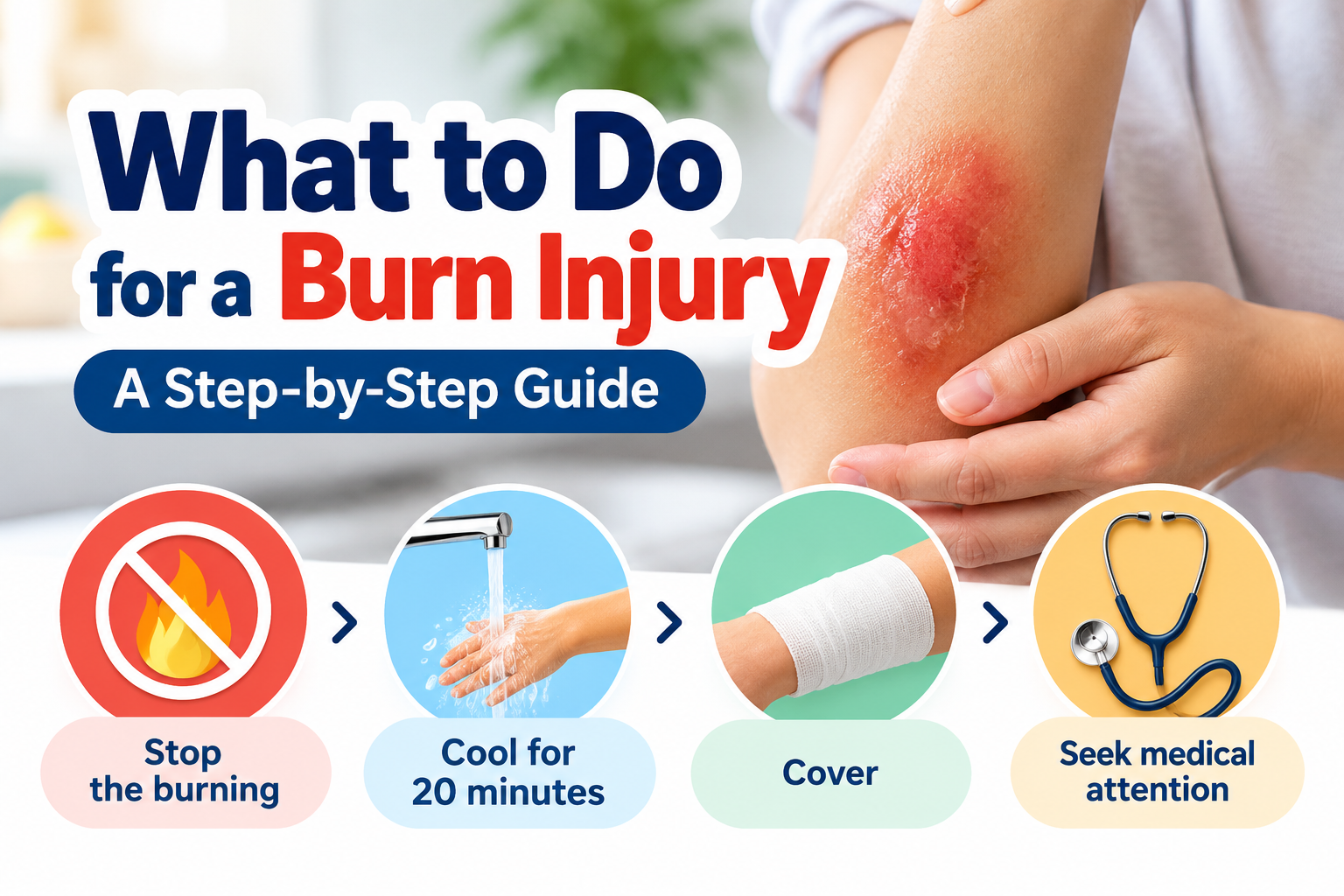
2. What Should You Do Immediately After a Burn Injury?
Knowing what to do immediately after a burn can help limit further tissue damage.
1. Stop the burning process
Move away from the source of heat and make sure the surrounding area is safe.
Remove jewellery, watches and loose clothing near the injured area where possible, as swelling may develop. Do not remove clothing that is firmly stuck to the burned skin.
2. Cool the burn for 20 minutes
Cool a thermal burn under cool running water for 20 minutes, as soon as possible after the injury.
Do not apply ice directly to the burn. Very cold temperatures can cause further tissue injury.
3. Avoid home remedies
Do not apply substances such as:
-
Toothpaste
-
Butter or cooking oil
-
Powders
-
Unprescribed creams or traditional remedies
These do not adequately cool the injury and may interfere with subsequent wound assessment.
4. Do not deliberately break blisters
Avoid bursting burn blisters at home. The wound should be assessed appropriately if there is concern about its depth or severity.
5. Protect the burn
After cooling, the burn can be loosely covered with a clean, non-fluffy material while medical attention is sought.
When should you seek medical attention?
Seek medical assessment for burns that are:
- Large or appear deep
- On the face, eyelids, hands, feet, genital area or major joints
- Caused by chemicals or electricity
- Associated with significant pain, swelling or other injuries
Seek urgent medical attention for breathing difficulties, suspected smoke inhalation, loss of consciousness or other signs of serious injury.
For a thermal burn, remember:
Stop the burning → Cool for 20 minutes → Cover → Seek medical attention when necessary.
This information is intended for general health education and does not replace professional medical advice or emergency assessment.

Dr Chooi Lai Kuan
Consultant Plastic & Reconstructive Surgeon
Sunway Medical Centre Damansara